
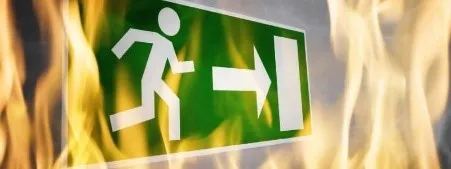
You are an integral part of safety and the smooth running of the evacuation.
We expect you to follow the safety rules and good practices. To do this, we will first define what a planned evacuation is, then show you how to prepare for it, and finally, which are the behaviors to adopt.
Planned evacuation: what is it?
Emergency evacuation consists of bringing all the occupants of an area or building to safety, either by taking them outside to an assembly point; or by taking them to a safe area, particularly for PRM (People with Reduced Mobility).
Evacuation can be triggered in the event of a planned evacuation or an actual incident, such as fire or smoke / natural disasters / risk of collapse / gas leak / release of toxic products.
Why are planned evacuations organised? What are the objectives?
In some emergencies, when the situation is sudden and unexpected, an evacuation of the premises may be necessary. The level of staff preparedness and the time taken to evacuate are the decisive aspects for your safety and the preservation of your health. Acting fast practicing correct actions is essential in the event of an emergency and evacuation!
Planned evacuations are a regulatory obligation. They allow the testing of operating conditions and the effectiveness of fire and emergency equipment (e.g. alarm systems and fire doors). They also help to improve the reflexes of the occupants and to optimise the smooth progress of the evacuation. In short, move on to practice!
At CERN, how to prepare?
First of all, take the time to familiarise yourself with the evacuation plan.

This will enable you to identify the main emergency exits (the nearest one for an evacuation), the location of the various safety devices such as fire extinguishers, fire hydrants and evacuation routes, as well as the location of the assembly point identified as follows:
You must initiate the evacuation alert by pressing a manual trigger identified as below. In some buildings, the fire detection system will activate the evacuation alert automatically (the evacuation can also be given verbally).
In the event that a person has difficulty moving around (PRM), evacuation chairs are available to ensure rapid evacuation.
Also note that there are Emergency Guides in your buildings, who are trained to: be in charge of evacuation procedures – prevent anyone from retreating during an evacuation – close doors and windows – guide occupants to the nearest assembly point – gather and count people at the assembly point.
What should you do?
Leave your belongings behind and take only the bare essentials with you:
- Close the windows, turn off the power;
- Leave the premises quickly, but without haste, following the direction indicated by the "Emergency exit" pictograms;
- Close the doors, without locking the locks;
- Never take the lift (except in case of special instructions as at the LHC) and avoid any reckless action; • Pay special attention to handicapped or injured people;
- Never go backwards during the evacuation;
- Reassure people who seem to be losing their composure;
- Follow the signs and move to the assembly point.
Some of us play a special and fundamental role in an emergency evacuation (planned or unplanned): the Emergency Guides. In your building, men and women have voluntarily trained themselves to ensure an efficient evacuation and guide you safely to the assembly point.
Are you interested in this role? Do you want to play an active role in safety?Get in touch with your TSO! |
In summary:
- Prepare for the evacuation: take note of the evacuation plan, the location of the manual evacuation triggers, the assembly point and any special equipment for people with reduced mobility.
- Keep calm: leave your work area quietly, closing windows and doors if possible. Keep equipment safe for people working in a workshop.
- Respect the safety instructions: leave your belongings on the spot, go immediately to the assembly point (do not smoke at the assembly point) and join the building once the evacuation officer authorises it.
| Remain in the assembly area (as a group) until the TSO or fire and rescue personnel announce the end of the evacuation and instruct you to leave. Do not re-enter the building until informed by fire and rescue personnel. |
Respect safety rules, signs and evacuation plans. Need a refresh? Take again the Emergency Evacuation course on the Learning Hub !
If you have any questions or would like to share your experience of an evacuation, please write to Safety Office SY !
If you feel a situation is risky, make an Incident Declaration !
—————————————
Vous faites partie intégrante de la sécurité et du bon déroulé de l’évacuation.
Nous attendons de vous le suivi le respect des règles de sécurité ainsi que des bonnes pratiques. Pour ce faire, nous allons d’abord définir ce qu’est une évacuation planifiée, vous présenter comment vous y préparer et enfin, les comportements à adopter.
L’évacuation planifiée : de quoi s’agit-il ?
L'évacuation d’urgence consiste à mettre en sécurité tous les occupants d'une zone ou d'un bâtiment, soit en les acheminant à l'extérieur vers un point de rassemblement ; soit en les conduisant vers une zone de mise en sécurité, notamment pour les PMR (Personnes à Mobilité Réduite).
L'évacuation peut être déclenchée en cas d’évacuation planifié ou d’incident réel, lors d’incendie ou présence de fumées / de catastrophes naturelles / de risque d'effondrement / de fuite de gaz / de libération de produits toxiques.
Pourquoi organise-t-on des évacuations planifiées ? Quels sont les objectifs ?
Dans certains cas d’urgence, lorsque la situation est soudaine et inattendue, une évacuation des locaux peut être nécessaire. Le niveau de préparation du personnel et le temps d’évacuation sont les aspects décisifs pour votre sécurité et la préservation de votre santé. Agir vite et bien est essentiel en cas d’urgence et d’évacuation !
Les évacuations planifiées sont une obligation règlementaire. Elles permettent de tester les conditions de fonctionnement et l'efficacité des équipements d'incendie et d'urgence (exemples : systèmes d’alarme et portes coupe-feu). Elles permettent aussi d’améliorer les réflexes des occupants et d’optimiser le bon déroulement de l’évacuation. En somme, nous passons à la pratique !
AU CERN, comment s’y préparer ?
Avant toute chose, prenez le temps de vous familiariser avec le plan d’évacuation.

Ce dernier va vous permettre d’identifier les principales issues de secours (la plus proche pour une évacuation), la localisation des différents organes de sécurité tels qu’extincteurs, Robinet d’Incendie Armé (RIA) et voies d’évacuation, ainsi que la localisation du point de rassemblement identifié comme ceci:
Vous devez lancer l’alerte évacuation en appuyant sur un déclencheur manuel identifié comme ci-dessous. Dans certains bâtiments, la détection incendie activera l’alerte évacuation automatiquement (L’évacuation peut aussi être donnée oralement).
Dans le cas où une personne rencontrerait des difficultés à se déplacer (PMR), vous trouverez des chaises d'évacuation mises à disposition afin de leur assurer une évacuation rapide.
Notons également que des Guides d'Urgence sont présents dans vos bâtiments, ils sont formés pour : Être en charge des procédures d'évacuation – empêcher quiconque de revenir en arrière lors d'une évacuation – fermer les portes et fenêtres – guider les occupants vers le point de rassemblement le plus proche – rassembler et compter les personnes au point de rassemblement.
Que devez-vous faire?
- Laissez vos affaires sur place, ne prendre avec soi que le strict nécessaire;
- Fermez les fenêtres, coupez les énergies;
- Quittez le local rapidement, mais sans précipitation, en suivant la direction indiquée par les pictogrammes « Sortie de secours »;
- Fermez les portes, sans verrouiller les serrures;
- Ne prenez jamais l'ascenseur (sauf en cas de consigne particulière comme au LHC) et évitez toute action téméraire;
- Portez une attention particulière aux personnes handicapées ou blessées;
- Ne revenez jamais en arrière pendant l’évacuation;
- Rassurez les personnes qui semblent perdre leur calme;
- Suivez les indications et déplacez-vous jusqu'au point de rassemblement.
Certains d’entre nous jouent un rôle particulier et fondamental lors d’une évacuation d’urgence (planifiée ou non): les Guides d’Urgence. Dans votre bâtiment, des hommes et des femmes se sont volontairement formés pour assurer une évacuation efficace ainsi que votre mise en sécurité au point de rassemblement.
Ce rôle vous intéresse ? Vous voulez participer activement à la sécurité ?Rapprochez-vous de votre TSO ! |
En synthèse:
- Se préparer à l’évacuation: prendre connaissance du plan d’évacuation, de la localisation des déclencheurs d’évacuation manuels, du point de rassemblement et des éventuels équipements spécifiques pour les personnes à mobilité réduite.
- Garder son calme: quitter votre zone de travail calmement en fermant fenêtres et portes si possible. Mettre en sécurité les équipements pour les personnes évoluant au sein d’un atelier.
- Respectez les consignes de sécurité: laisser vos affaires sur place, se rendre immédiatement au point de rassemblement (ne pas fumer au point de rassemblement) et rejoindre le bâtiment une fois l’accord du responsable d’évacuation donnée.
Restez dans la zone de rassemblement (en groupe) jusqu’à ce que le TSO ou le personnel du service d’incendie et de secours annonce la fin de l’évacuation et vous enjoignent de partir. Ne rentrez pas dans le bâtiment avant d’en avoir été informé par le personnel du service d’incendie et de secours. |
Besoin d’un rafraîchissement? Suivez à nouveau la formation Évacuation en cas d’urgence disponible sur le portail de formation !
Vous avez des questionnements ou vous souhaiteriez partager votre expérience d’une évacuation: écrivez au Safety Office SY !
Une situation vous semble à risque, faites une Déclaration d’Incident !
Also On At CERN
-

Six rules to avoid cycling accidents
To go further, follow the e-learning course: “Road traffic – Bike Riding“ Pour aller plus loin, suivez le cours e-learning “Circulation routière – Rouler à vélo“ Also On At CERN
-
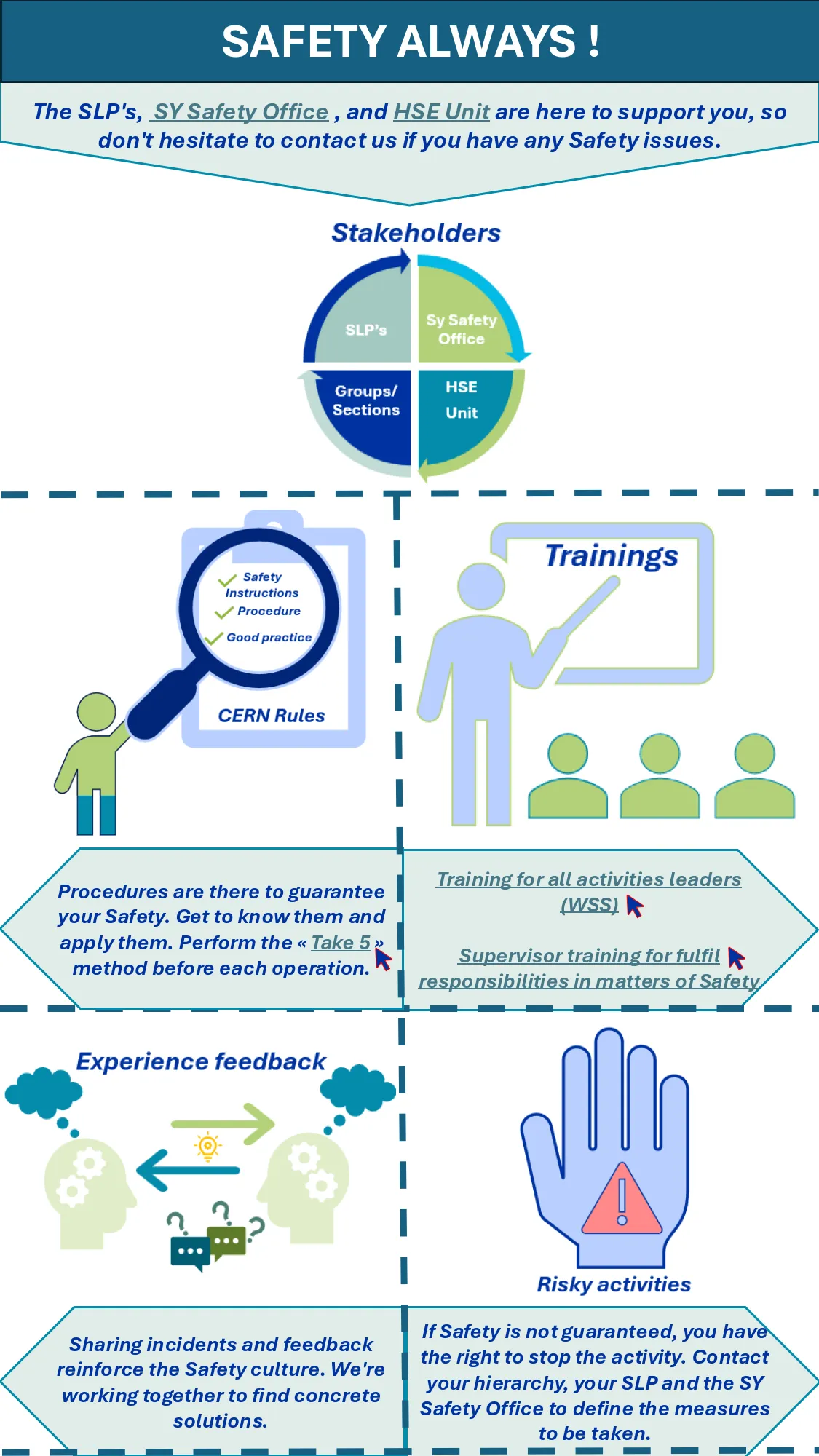
Safety always
Links: SY Safety Office HSE unit Method “Take 5“ Training for all activities leaders (WSS) Supervisor training for fulfil responsibilities in matters of Safety Also On At CERN
-
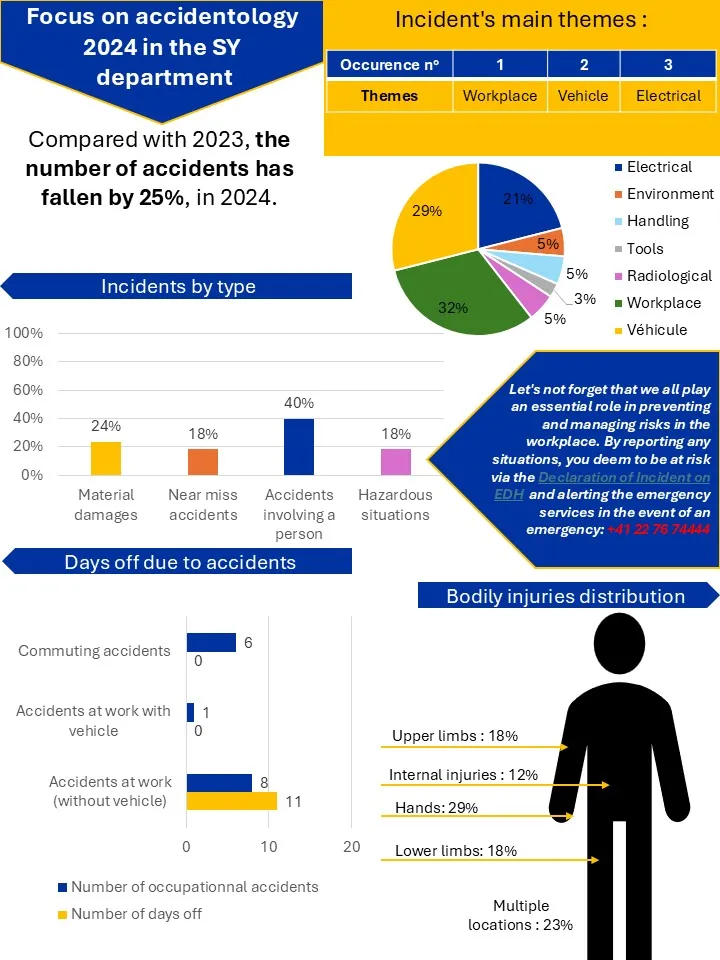
Focus on accidentology 2024 in the SY Department
EDH Incident declaration Also On At CERN
-
Incident declaration
All Safety Incidents occurring on the CERN site or related to CERN activities must be declared. This includes commuting accidents. The responsibilities in matters of safety incident management at CERN are specified in the Safety Regulation SR-SIM available on https://hse.cern/rules. The procedures related to the declaration of Safety Incidents are detailed in the admin e-guide.…
-
In an emergency, every second counts
Become an actor in case of medical emergency! Sign-up on the CERN’s Learning Hub for the “First Aid – Life Saving Actions (LSA) ” training. In this 3-hour course, you will learn who to deal with emergency situations: protect, alert and perform essential first aid actions. The French Federation of Cardiology estimates that each minute…
-

Radiological reminder – Visits nonprofessional and professional ionising radiation areas
For all types of visits on “supervised” areas and professional visits on “supervised” an “controlled” areas, according to General Safety Instruction GSI-SH-1 EDMS 1137263, the escort shall wear his passive dosimeter DIS and activate an Operational dosimeter DMC from the beginning of the visit, with dedicated IMPACT – Professional visit, which has first been validated…
-

What is your security behavior? Evaluate your safety culture
Do you apply the necessary measures for your safety and that of your loved ones (colleagues, family…)? Take this test to assess your safety culture and list your progress! Only one answer per question is possible. Write down your answers and you can determine your profile with the results at the end of the questionnaire!…
-

From tidying up the workspace to a healthy, risk-free working environment
Did you know that objects left on the floor are one of the main causes of accidents at home and at work? Although they may appear harmless, objects that are stored incorrectly or on pathways can be the cause of colisions, falls and slips that can have serious consequences for your health. Although these accidents…
-
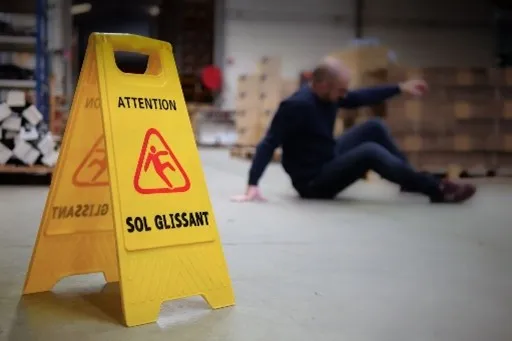
Falls occuring at same level
Saviez-vous qu’au cours de ces deux dernières années, les chutes de plain-pied (glissades, trébuchements, faux-pas et autres pertes d’équilibre sur une surface plane) représentent la 3ème cause principale d’accidents au CERN. Ces chutes surviennent aussi bien à l’intérieur qu’à l’extérieur des locaux. Avec une part de 12% de l’ensemble des accidents répertoriés, cette catégorie d’accidents…
-
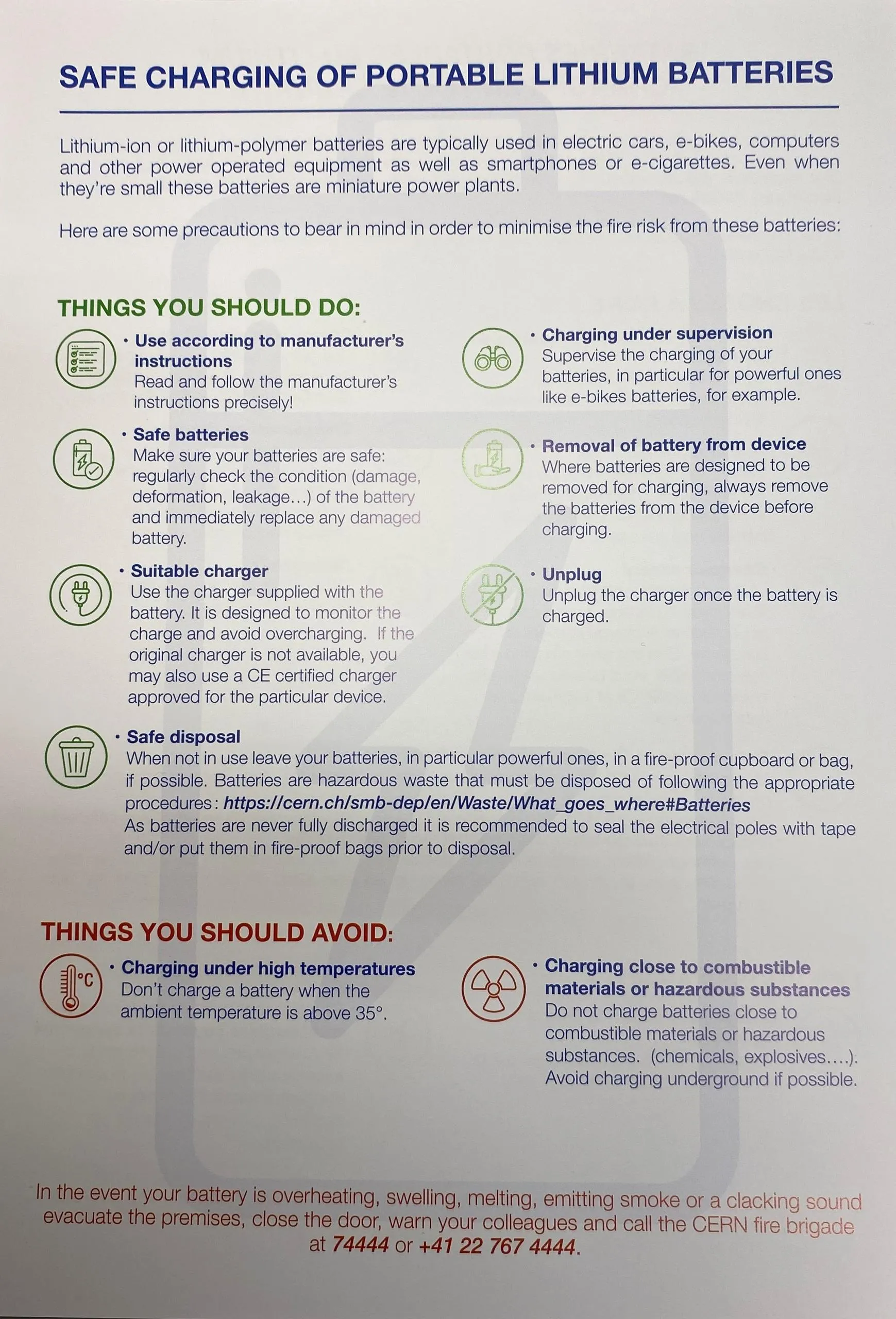
Safe charging of portable lithium batteries
LINK to the CERN bulletin article Also On At CERN